Most Australian businesses do not need to build their own AI system from the ground up. They need AI features wired into the tools they already use every day. That is what AI integration means, and for most companies it is faster, cheaper, and far lower risk than starting from zero. This guide covers what AI integration involves, where it helps, what it costs, how long it takes, and the Australian rules you cannot skip.
What AI integration actually means
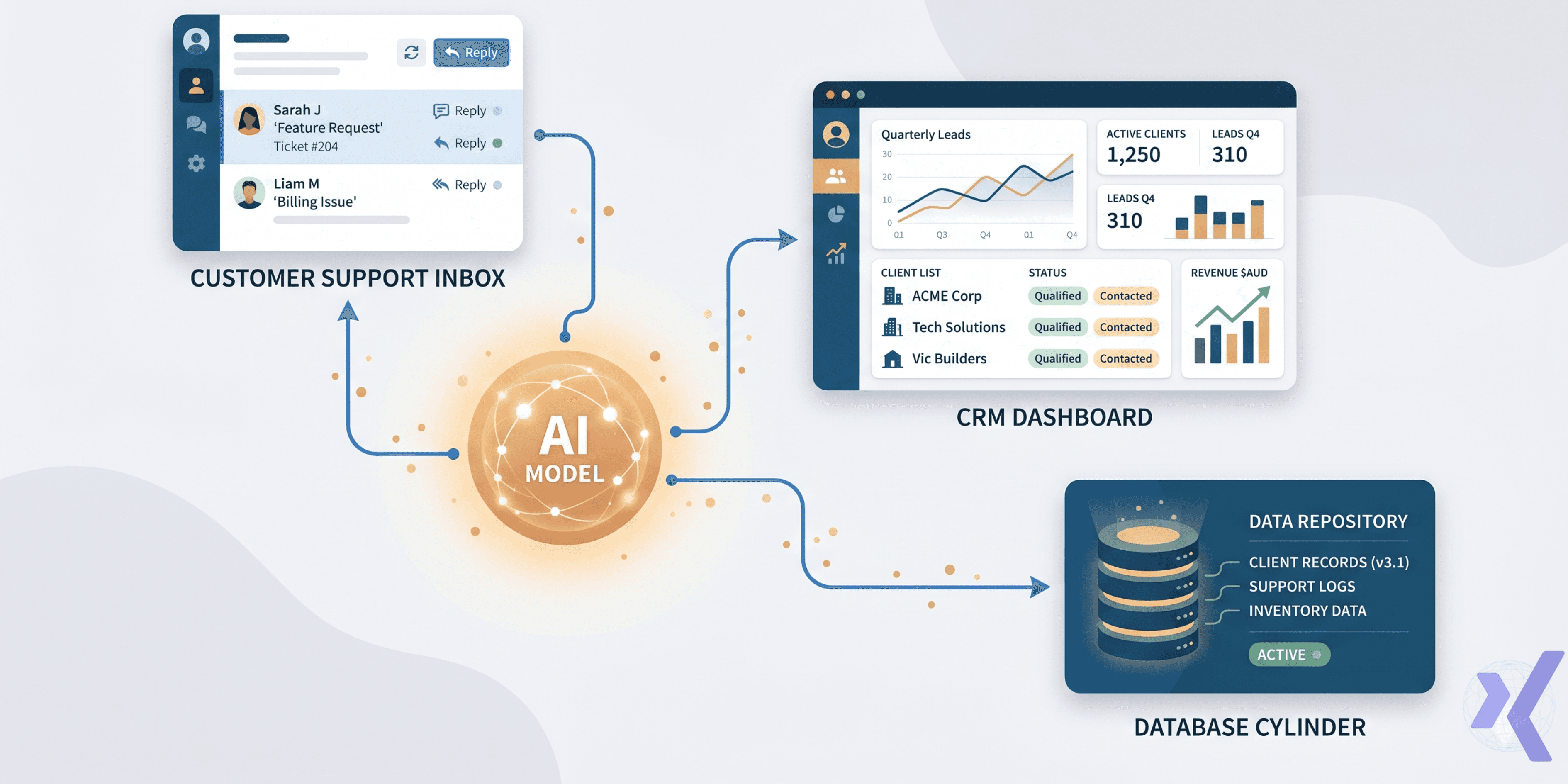
AI integration is the work of connecting an AI model to the software your business already runs. You are not replacing your systems. You are adding features on top of them. A few common examples:
- A support chatbot that answers customer questions using your own help articles and product data
- Smart search that understands what a customer means, not only the exact words they typed
- Document processing that reads invoices, contracts, or forms and pulls out the details on its own
- Recommendation features that suggest the next product or action based on what a user has already done
The model itself usually comes from a provider such as OpenAI, or it runs on your own servers with a tool like Ollama when the data has to stay in house. The integration is the part that connects that model to your data and your software, so it answers based on your business and not generic information from the public internet. The method that makes this work is called retrieval augmented generation, or RAG, and it is how you stop a model from making things up.
Where AI integration helps Australian businesses most
The best place to start is a task that happens often and follows a pattern. Good candidates include:
- Customer support. Deflect repeat questions and give your team draft replies they can edit and send.
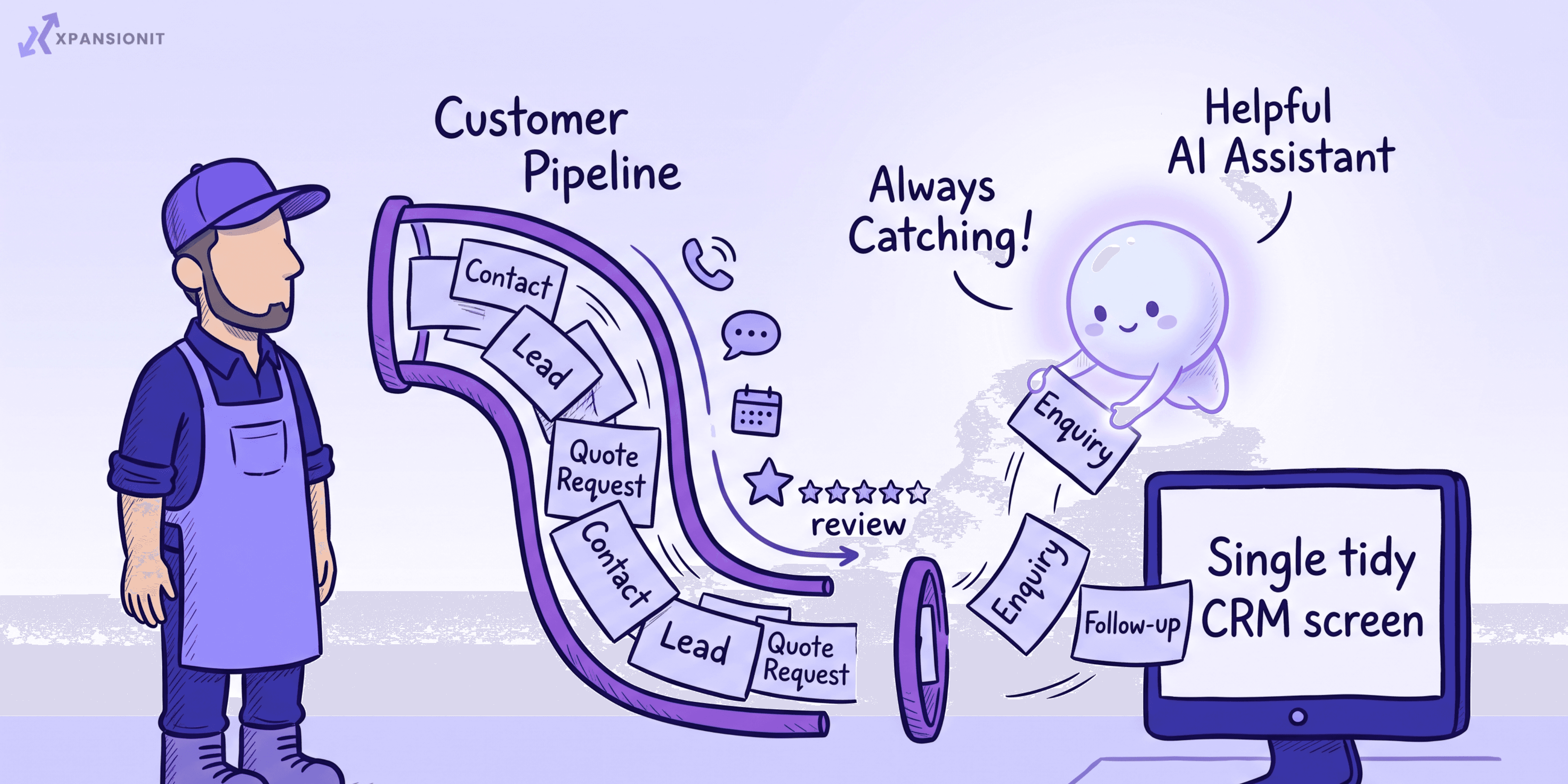
- Sales and CRM. Summarise call notes, draft follow ups, and flag the leads worth chasing first. This pairs well with a custom CRM built around how your business actually works.
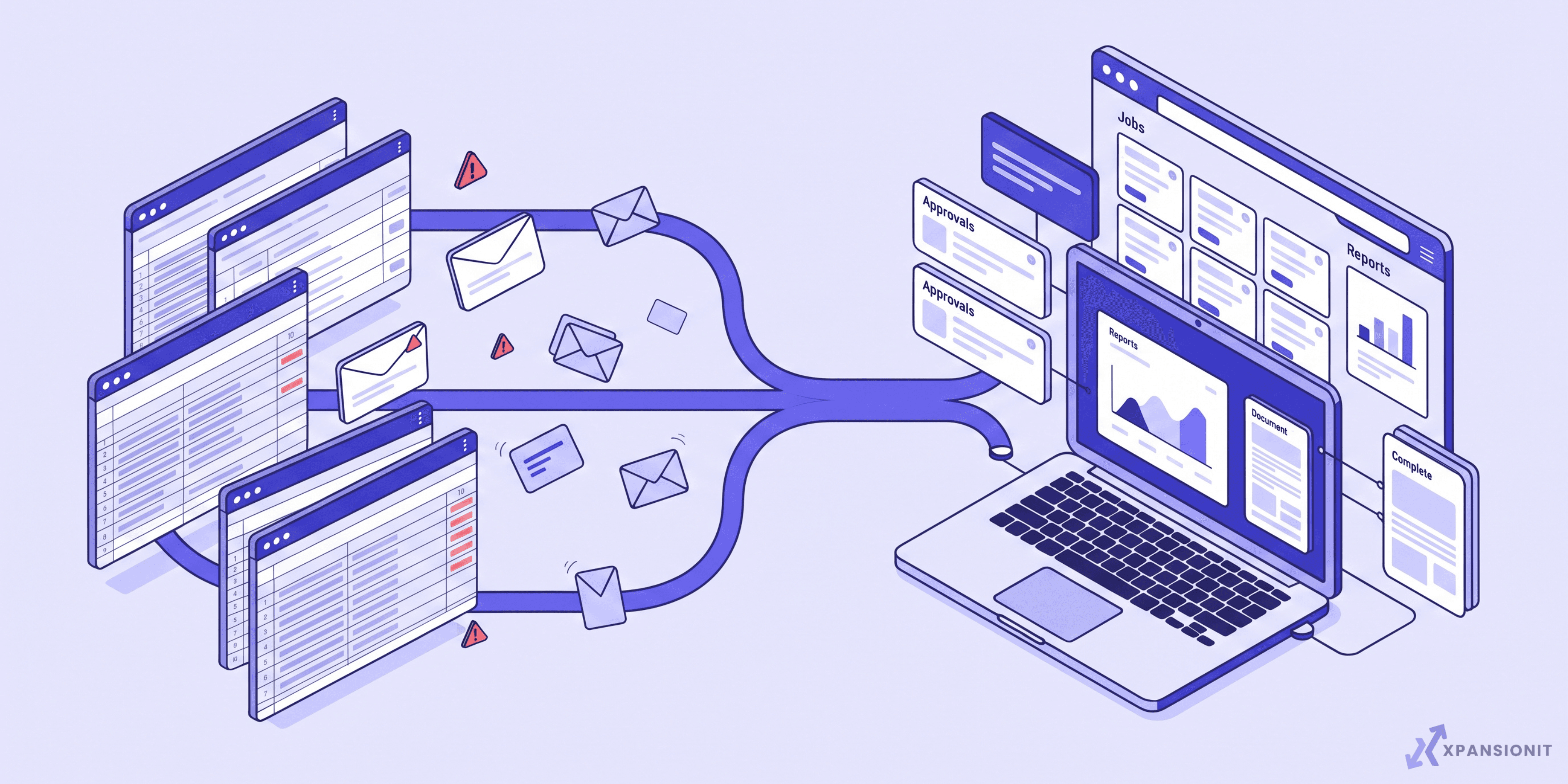
- Operations. Read incoming documents and route them to the right place. This is where workflow automation removes hours of manual handling.
- Forecasting. Use your own history to predict demand, spot churn early, or catch unusual activity. That is the job of predictive analytics.
Pick one task with a clear, measurable cost in staff hours. Prove the value there before you add more.
The Australian rules you cannot skip
If your AI features touch personal information, you sit under the Privacy Act 1988 and the Australian Privacy Principles, which the Office of the Australian Information Commissioner enforces. A few practical points:
- You must handle personal information the way the Australian Privacy Principles require, including how it is collected, stored, and disclosed.
- If you send customer data to an overseas model provider, that is a cross border disclosure and you are responsible for what happens to it.
- A serious data breach can trigger the Notifiable Data Breaches scheme, which means you may have to notify both the affected people and the regulator.
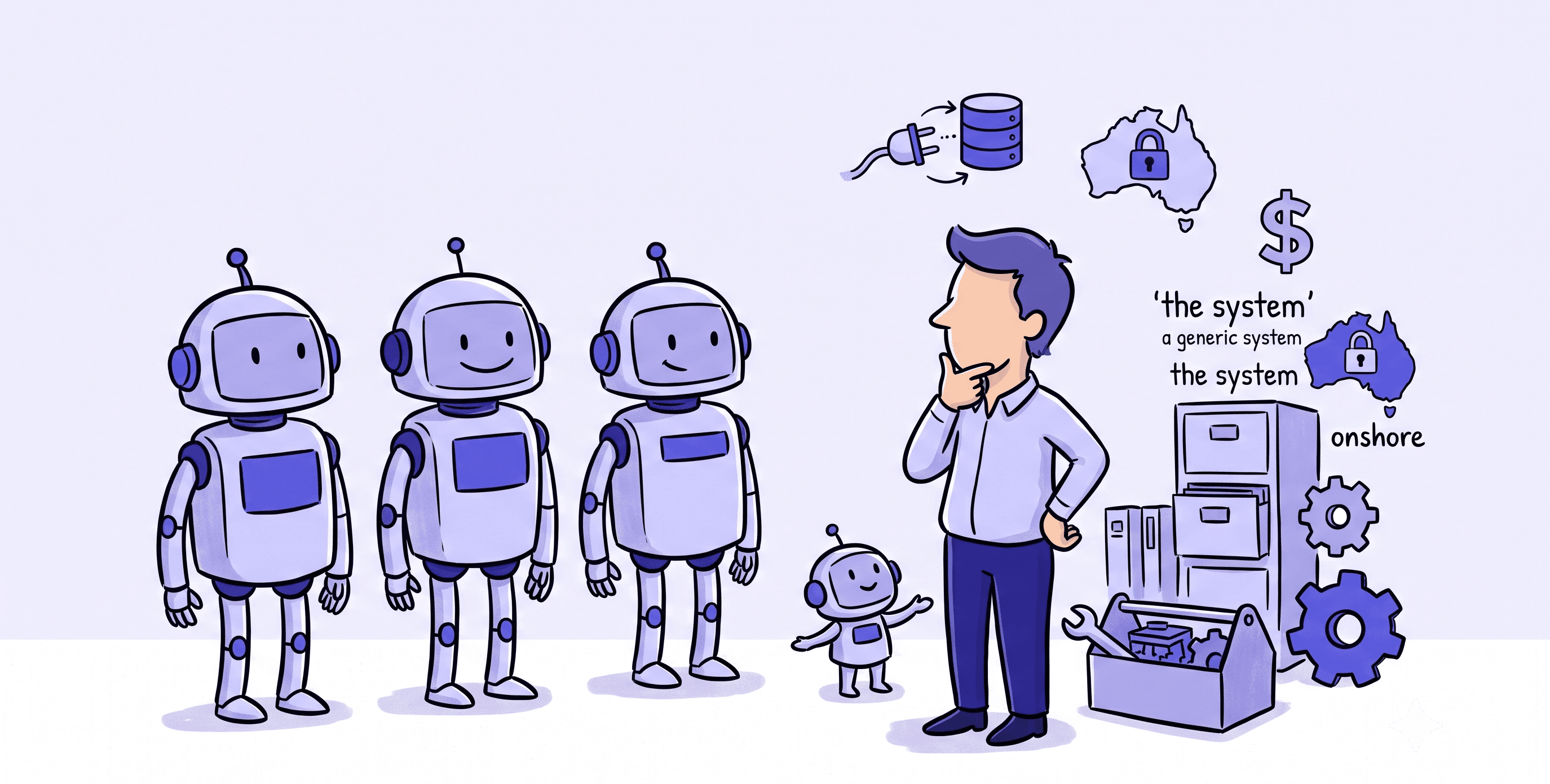
- Government, defence, and healthcare work often comes with data sovereignty requirements, which can mean running the model locally rather than sending data offshore.
This is one reason a local hosting option matters. Running a model on your own infrastructure with a tool like Ollama keeps sensitive data inside your control. Building privacy in from day one is the point of compliance and privacy management, not a step you bolt on at the end.
How a typical AI integration project runs
A focused integration follows a simple shape:
- Define one task. Choose a single high volume job and decide how you will measure success.
- Pick the model and where it runs. A hosted model for speed, or a local model when data must stay in house.
- Connect your data. Build the retrieval pipeline so the model answers from your information.
- Test against real cases. Use actual past tickets, documents, or queries, not made up examples.
- Launch with guardrails. Add limits, logging, and a way for a person to step in.
- Monitor and improve. Watch accuracy and cost, then expand once it earns its place.
What it costs and how long it takes
A focused integration is usually a matter of weeks, not months, because you are adding to systems that already exist. That makes it far cheaper than training a model of your own, which most businesses never need to do. Cost depends on three things: how messy your existing data is, whether you use a hosted or local model, and how many tasks you connect. Ongoing model usage is a running cost, so it pays to measure value early rather than connecting everything at once. The honest answer is that a single well chosen integration often pays for itself in saved staff hours within the first few months.
How to get started
Start small and start specific. Write down one task that eats your team's time, put a number on what it costs you each month, and use that as the test. If the integration beats the number, you have proof and a reason to do the next one. If you want a hand scoping the first task, you can book an intro call and we will tell you whether AI integration is the right move before any work begins.