There comes a point where a CRM stops helping and starts getting in the way. Your team builds workarounds, keeps a spreadsheet on the side, and pays for features nobody touches. When that happens, custom CRM development in Australia is worth a serious look, because the cost of fighting the wrong tool every day adds up faster than most businesses realise.
This guide covers what a custom CRM is, the signs you have outgrown an off the shelf one, what it costs, how long it takes, and how it stacks up against tools like Salesforce and HubSpot.
What custom CRM development means
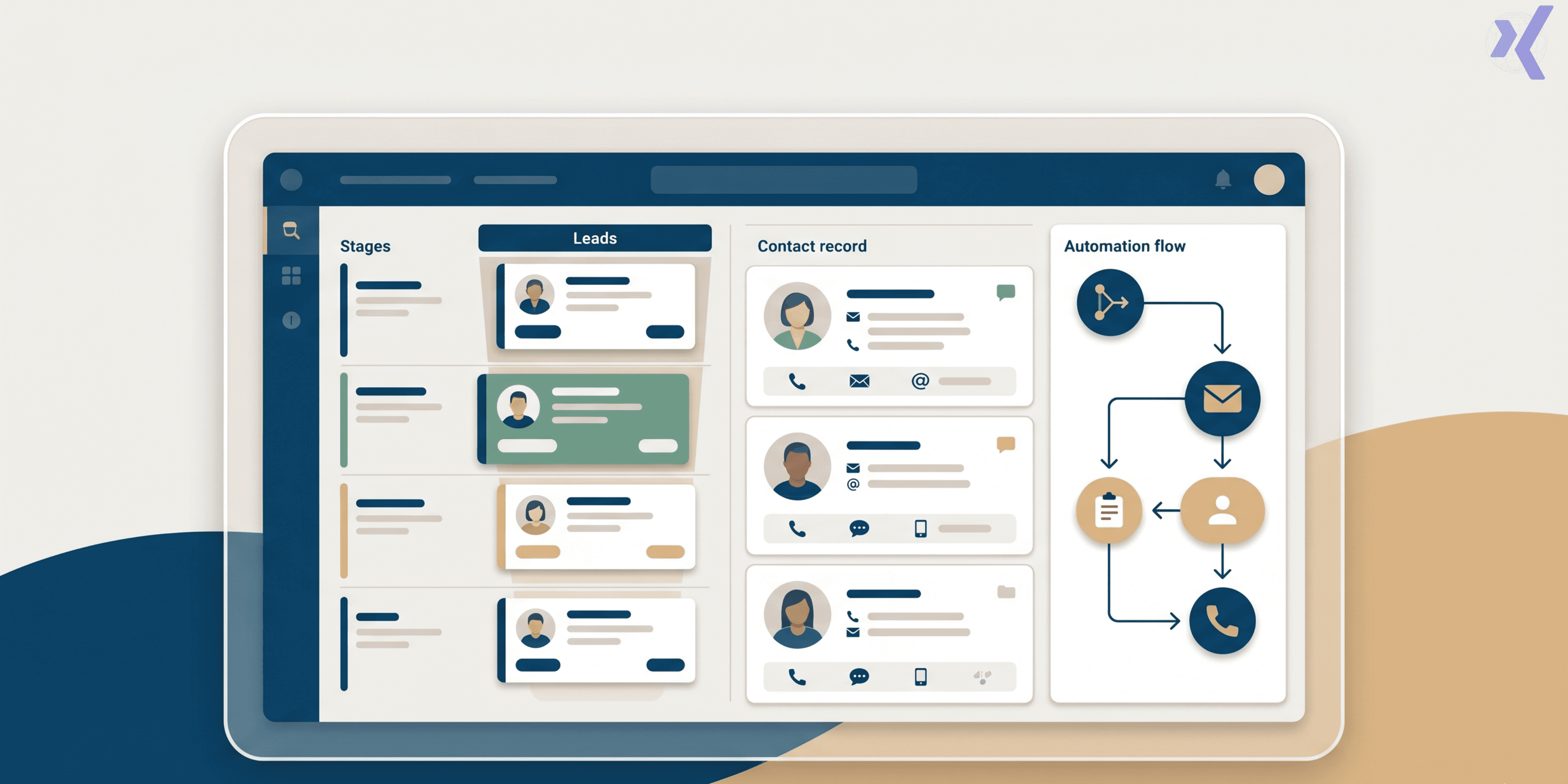
A custom CRM is a customer system built around how your business actually operates, rather than one you bend your business to fit. It holds the same core pieces as any CRM, contacts, deals, tasks, and history, but the fields, the stages, and the automations match your real process.
The difference shows up in the daily detail. An off the shelf CRM gives you a fixed pipeline and asks you to work the way it expects. A custom CRM gives you the pipeline your sales team already uses, the fields your operations team actually needs, and the automations that match the steps your business runs through on every job.
Signs you have outgrown an off the shelf CRM
You do not need a custom build on day one. Most businesses should start with a standard tool. The case for a custom CRM gets strong when several of these are true:
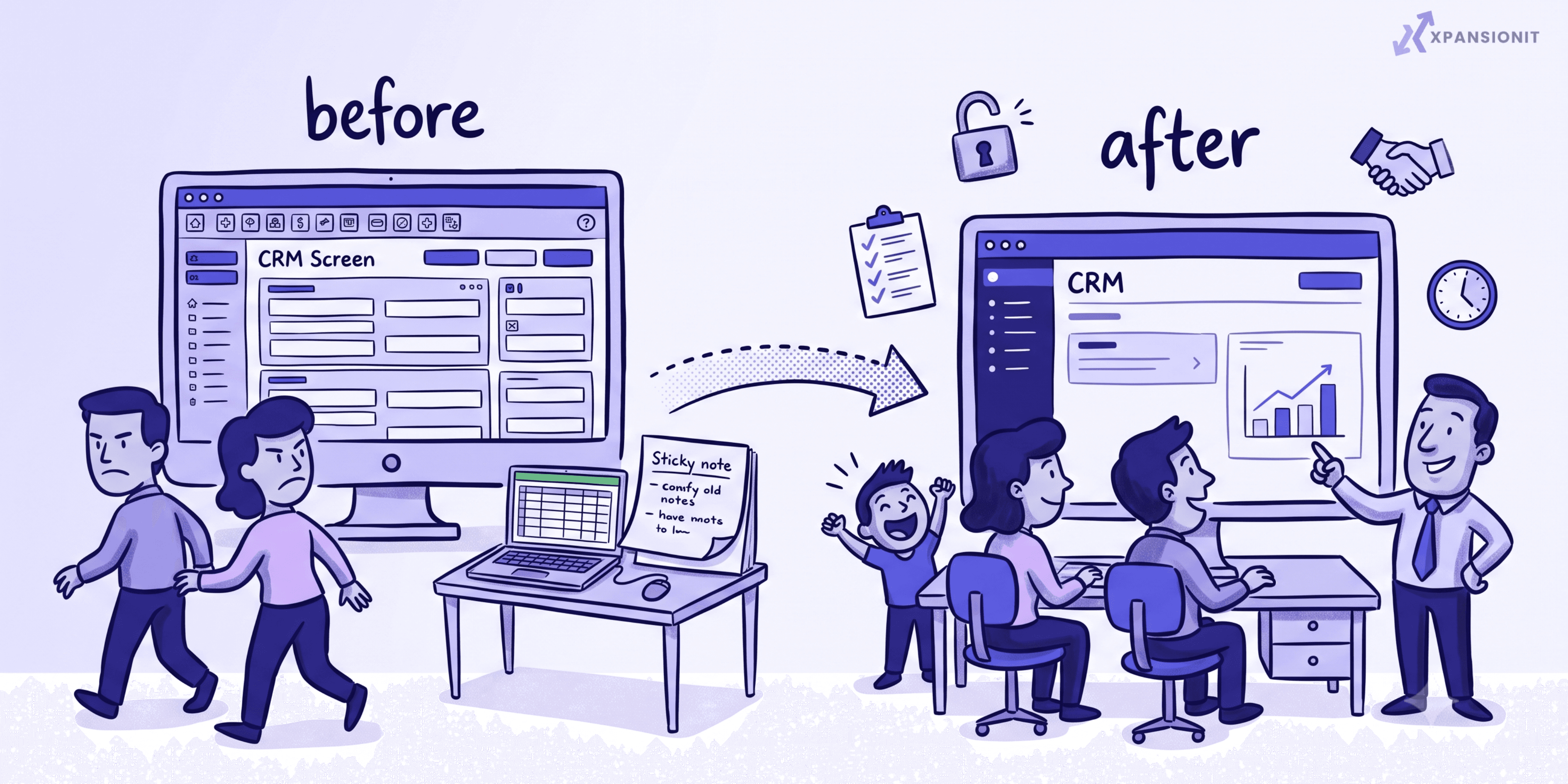
- Your team keeps a separate spreadsheet because the CRM cannot track what matters
- You pay for a high tier plan mainly to unlock one or two features
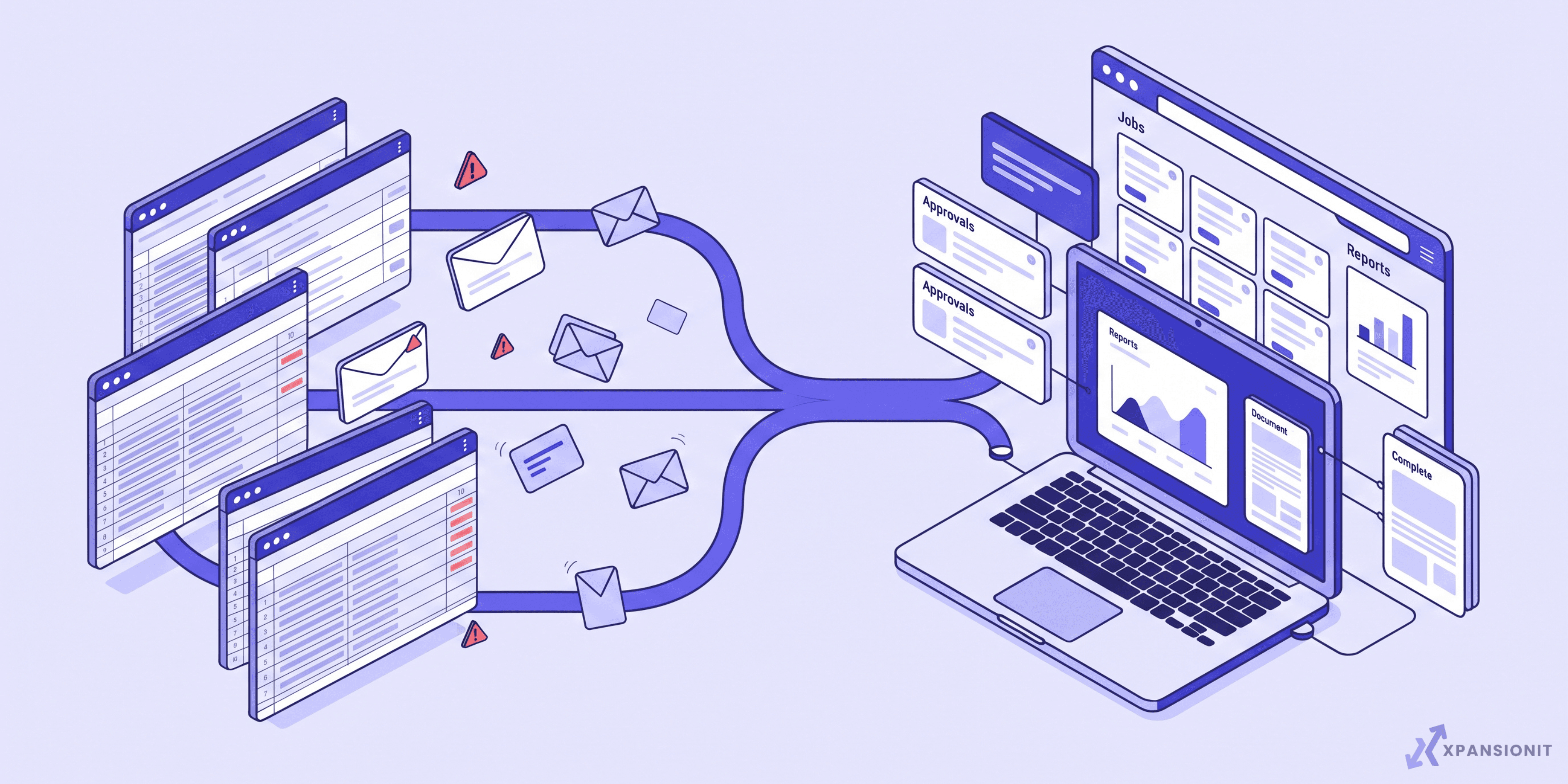
- Reporting takes hours because the data lives in three different tools
- Per user pricing has quietly become one of your larger software bills
- Your process is unusual enough that no template fits without heavy compromise
If two or three of these sound familiar, the maths often tips toward building.
Custom CRM versus Salesforce or HubSpot
This is the question most businesses ask first, so here is the plain version.
Off the shelf tools like Salesforce and HubSpot are excellent when your process is fairly standard and you want to be running this week. They are quick to start and well supported. The trade offs show up later: monthly per user fees that grow with your team, limits on how far you can change the core behaviour, and your data sitting in a structure you do not control.
A custom CRM costs more to build at the start, but you own it outright, there are no per user fees, and it does exactly what your business needs. It also connects cleanly to your other systems, which is where business process automation starts removing manual work across the whole company, not just in sales.
The honest rule of thumb: rent off the shelf while your process is standard and your team is small, and build custom once the tool is fighting your process or per user fees are out of hand.
What it costs and how long it takes
A custom CRM is a software project, so the cost depends on scope: how many features you need, how many systems it connects to, and how messy the data you are migrating is.
The useful way to think about it is total cost over a few years rather than the upfront price alone. An off the shelf CRM has a low starting cost and a per user fee that never stops and grows with your team. A custom CRM has a higher upfront cost and then mainly hosting and support, which stays roughly flat as you grow. For a growing team, the lines often cross within a couple of years.
On timing, a focused first version is usually live within a few weeks rather than many months, because the smart approach is to build the core your team uses every day first, then add the rest once it is working in production.
Keeping it compliant in Australia
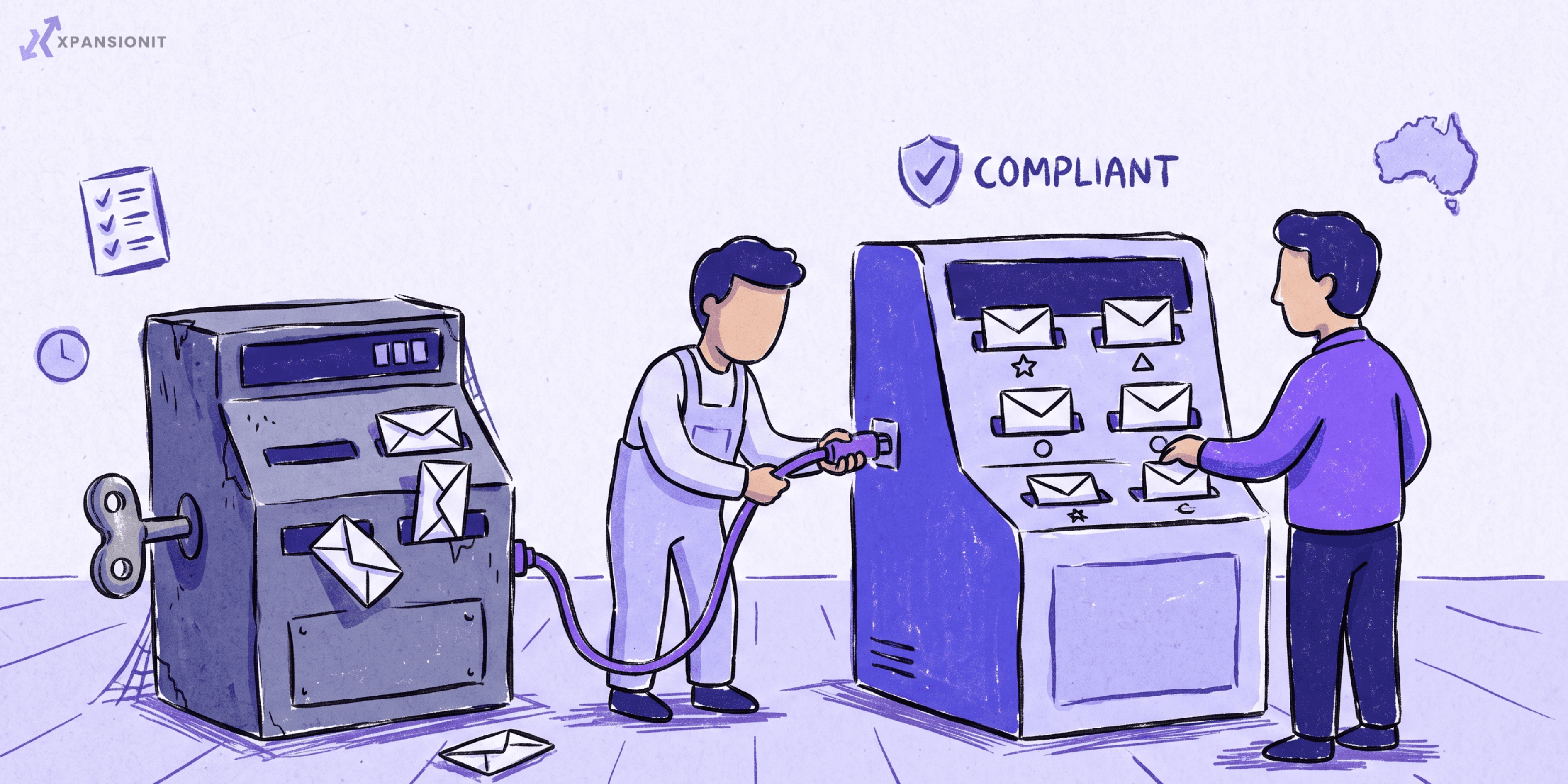
A CRM holds personal information, so it sits under the Privacy Act 1988 and the Australian Privacy Principles, which the Office of the Australian Information Commissioner enforces. Building your own actually helps here, because you control where the data lives and who can reach it, rather than trusting a third party structure you cannot see into. If a breach ever happens, the Notifiable Data Breaches scheme may require you to notify both the affected people and the regulator, so it pays to design access controls and logging in from the start.
Should you build or modernise what you have
Building from scratch is not the only path. If you already run a custom CRM that has become slow or hard to change, legacy software modernisation can fix the parts that hurt without throwing away the parts that work. Start there before you commit to a full rebuild.
How to decide
Write down the one thing your current CRM cannot do that costs you the most time or money. Put a number on it per month. If a custom build clears that number and the per user fees you would stop paying, you have your answer.
If you want a hand running that maths for your situation, you can book an intro call and we will tell you honestly whether building is the right move before any work begins.