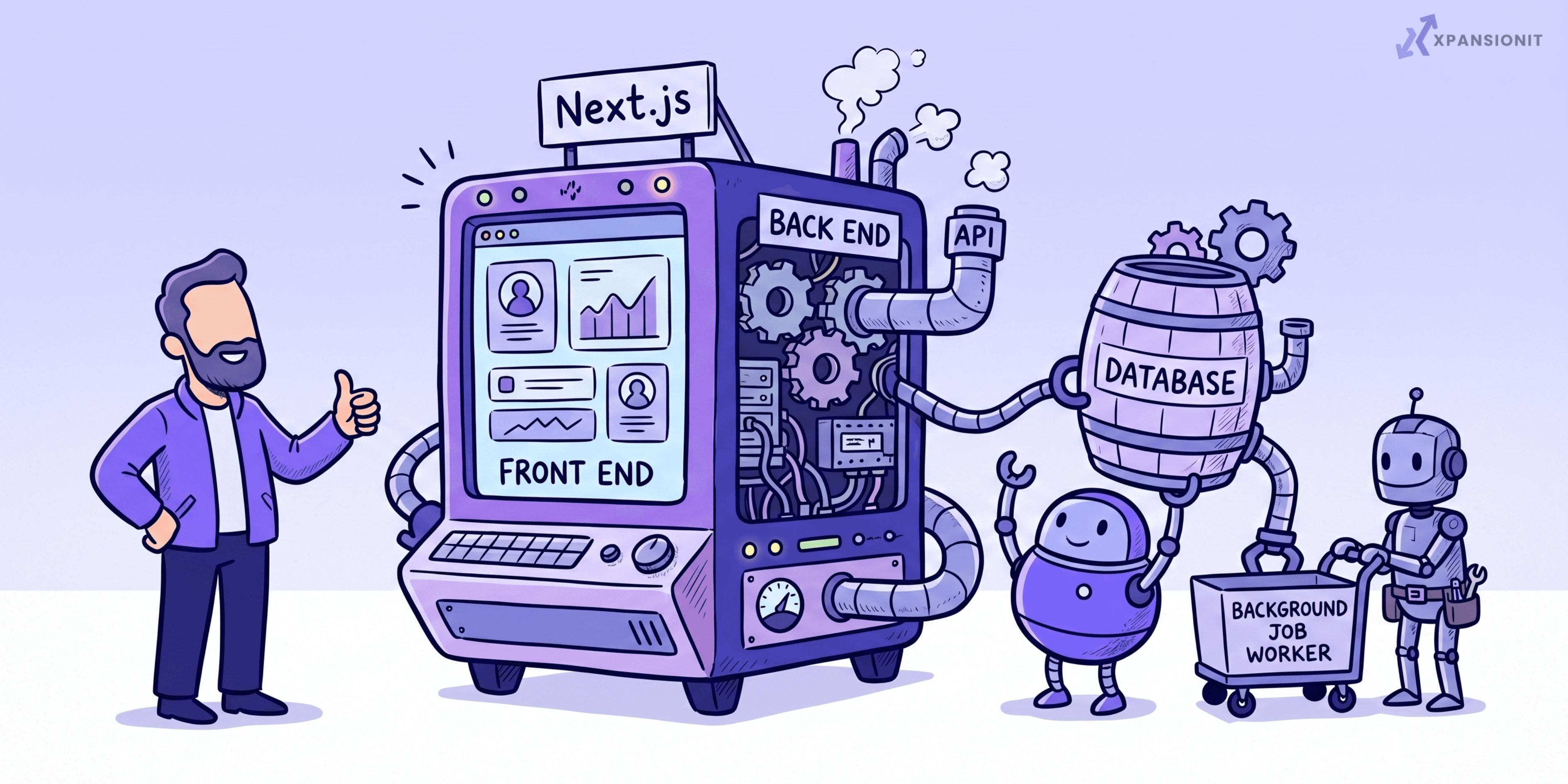
Australian websites fight a problem that has nothing to do with their code: distance. Most of the world's web infrastructure sits in the United States and Europe, our connections are good but not the fastest (Australia sits around the high 40s globally for fixed broadband on Ookla's Speedtest Global Index), and a lot of traffic is on mobile. A heavy site served from far away punishes an Australian audience more than almost anywhere else. We covered the why in why Australian websites are slow. This post is about the fix, and why Next.js for Australia is one of the best tools for it.
The Australian distance problem, briefly
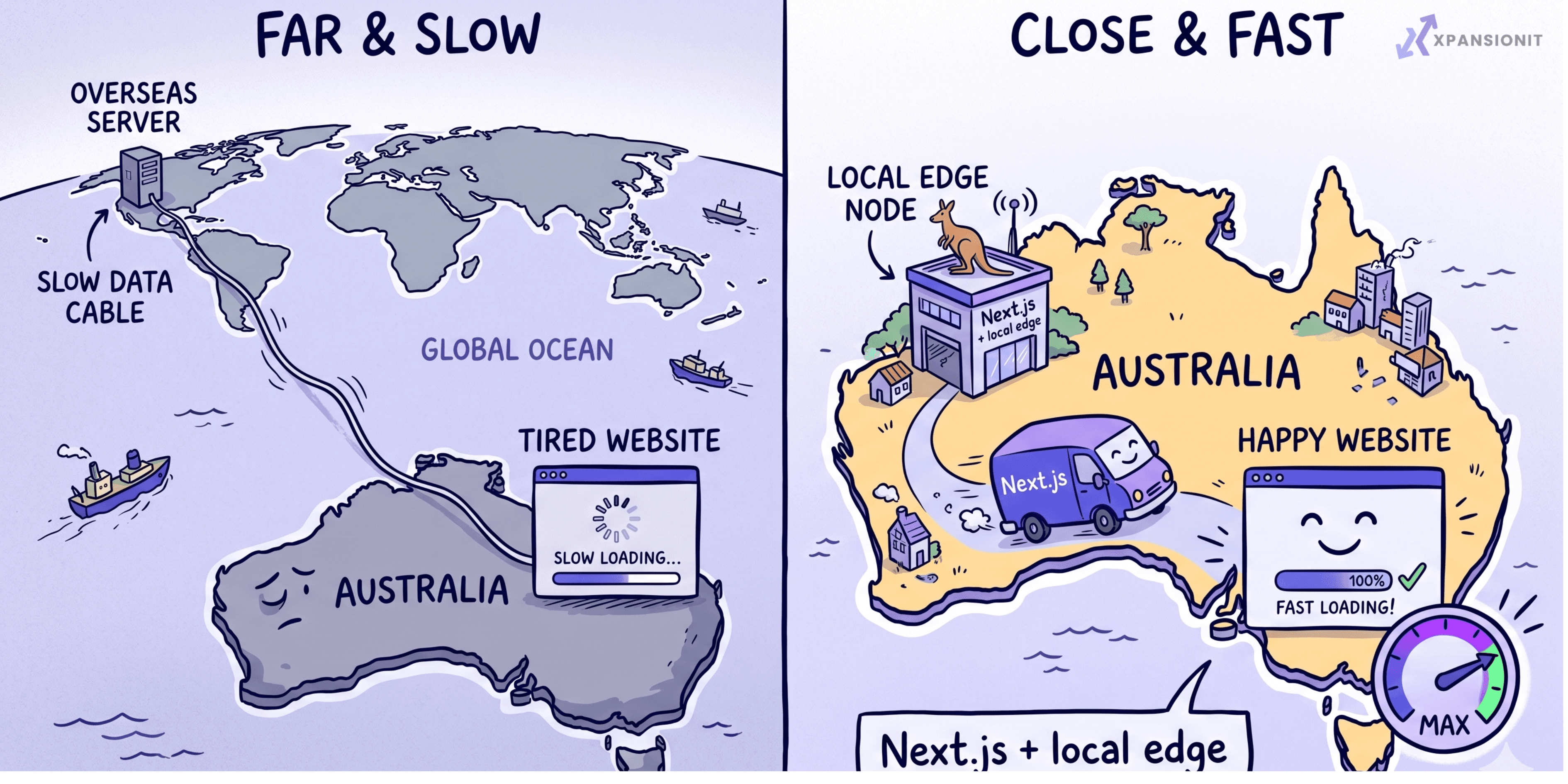
When your site is hosted overseas, every request from an Australian visitor crosses the Pacific and back before your server does any work. Add a heavy page and a mobile connection in regional Australia, and a site that feels fine in California feels sluggish in Adelaide. Beating that comes down to two things: serve less work to the device, and serve it from closer. Next.js is built for both.
Why Next.js suits an Australian audience
- Server-first rendering. Next.js sends the browser finished HTML, so the visitor's device and connection do less work. That matters most on the variable mobile and regional connections common across Australia.
- Static generation and caching. Pages can be pre-built and served from cache, so they load fast without hitting a distant server every time.
- Edge delivery and a CDN. This is the big one for Australia. Next.js works cleanly with edge networks and CDNs that have Australian locations, so your pages and assets are served from inside the country instead of across an ocean. The major clouds run local regions, including AWS in Sydney and Melbourne.
- Lean by default, if you let it. Shipping less JavaScript matters more on slower connections, the same discipline we cover in building faster websites. Next.js makes a lean build achievable, though it does not force one.
- SEO-friendly. Server-rendered pages get indexed properly, which helps you rank for the local searches that bring in Australian customers.
The payoff is real money. Google and Deloitte found a 0.1 second speed improvement lifted retail conversions by around 8%, and pages loading in one second convert about three times higher than pages taking five, per Portent.
How to deploy Next.js for an Australian audience
- Host or render close to your users. Deploy to a region or edge network with an Australian presence, so the trans-Pacific round trip disappears.
- Put a CDN with Australian edge locations in front. Serve images, fonts, and scripts from inside the country.
- Pre-render and cache aggressively. Use static generation or incremental regeneration wherever the content allows.
- Keep client JavaScript lean. Do not undo the speed gains by shipping a heavy bundle to a mobile user in regional Australia.
- Test from an Australian connection, not just office fibre, so you see what your actual audience sees.
This is everyday full stack web development done with the Australian audience in mind, and paired with UI and UX design so the site feels fast as well as measures fast.
When Next.js is the wrong tool
Be honest about fit. For a simple brochure site, Next.js is overkill and a lighter setup will do. Next.js also has a real learning curve, and for an unusual architecture you may be better served elsewhere, which we get into in Next.js for SaaS. And if your audience is genuinely all in one city, a well-placed host and a CDN may be all you need without the framework.
The local SEO bonus
Speed pays a second dividend here. A site that loads fast, is served from close to your audience, and is clearly relevant to Australian users sends strong local signals to Google, the same compounding effect we describe in the 2026 web development trends. Combined with accurate business details and useful content, that helps you rank ahead of slower overseas competitors for local searches.
How to start
Find out where your site is hosted and run your key pages through Google PageSpeed Insights from an Australian connection. If it is hosted overseas with no CDN, that is your single biggest, easiest win. Move it closer, put a CDN in front, and build lean with a framework like Next.js that does the heavy lifting for you.
The short version
Australian websites are slow mostly because of distance and heavy builds, not bad code. Next.js helps on both fronts: server-first rendering and lean builds mean less work for the device, while edge delivery and a CDN serve pages from inside Australia instead of across the Pacific. Host close to your users, cache hard, keep the JavaScript lean, and you get a fast, locally relevant site. Just skip it for simple brochure sites where it is overkill.
If you want a Next.js site built to be fast for an Australian audience, you can book an intro call and we will check your speed and hosting before any work begins.