"Next.js or WordPress?" is one of the first questions for any new website. For an Australian business where speed genuinely matters, because of the distance to overseas servers and our good-but-not-fastest connections, the Next.js vs WordPress answer usually leans toward Next.js. But it is not absolute, and it is worth understanding why the speed gap exists before you decide.
This post compares Next.js vs WordPress on speed for an Australian audience, explains what causes the difference, and covers when WordPress is still the right call.
What each one is
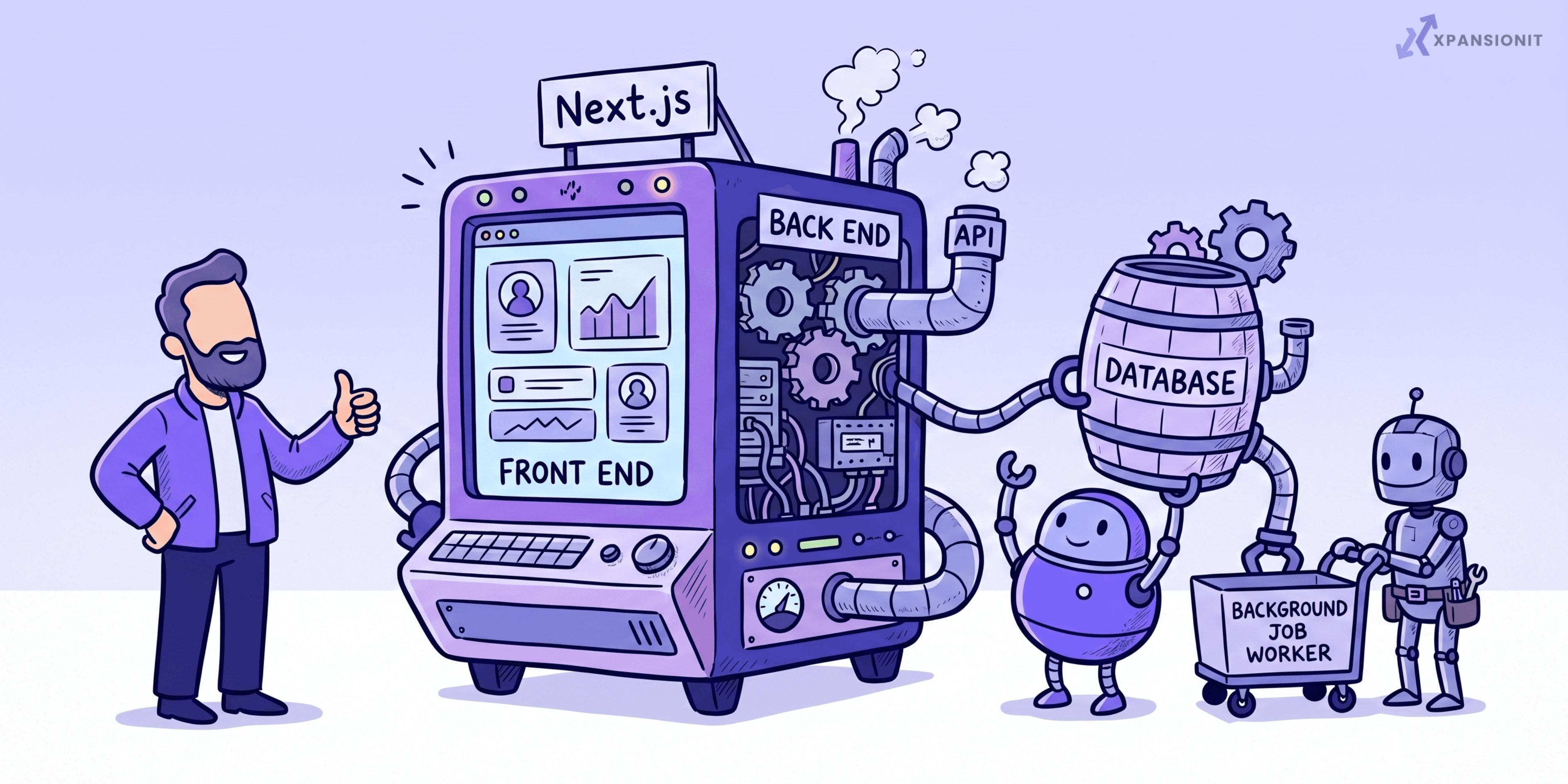
WordPress is a content management system that powers around 43% of all websites. It is quick to launch and runs on themes and plugins. Next.js is a React framework for building custom, server-first sites and apps. WordPress assembles a page from plugins and a database on request; Next.js sends a pre-built, lean page. That difference is the root of the speed gap.
Why Next.js is usually faster
- Lean by default versus plugin bloat. A typical WordPress site accumulates themes and plugins that each add weight and scripts. Next.js ships only the code a page needs. This is the same weight problem we cover in outgrowing WordPress.
- Pre-rendered and cached versus built-on-request. Next.js can serve static, pre-built pages from cache. A standard WordPress page is assembled per request unless you bolt on caching, which is one more thing to maintain.
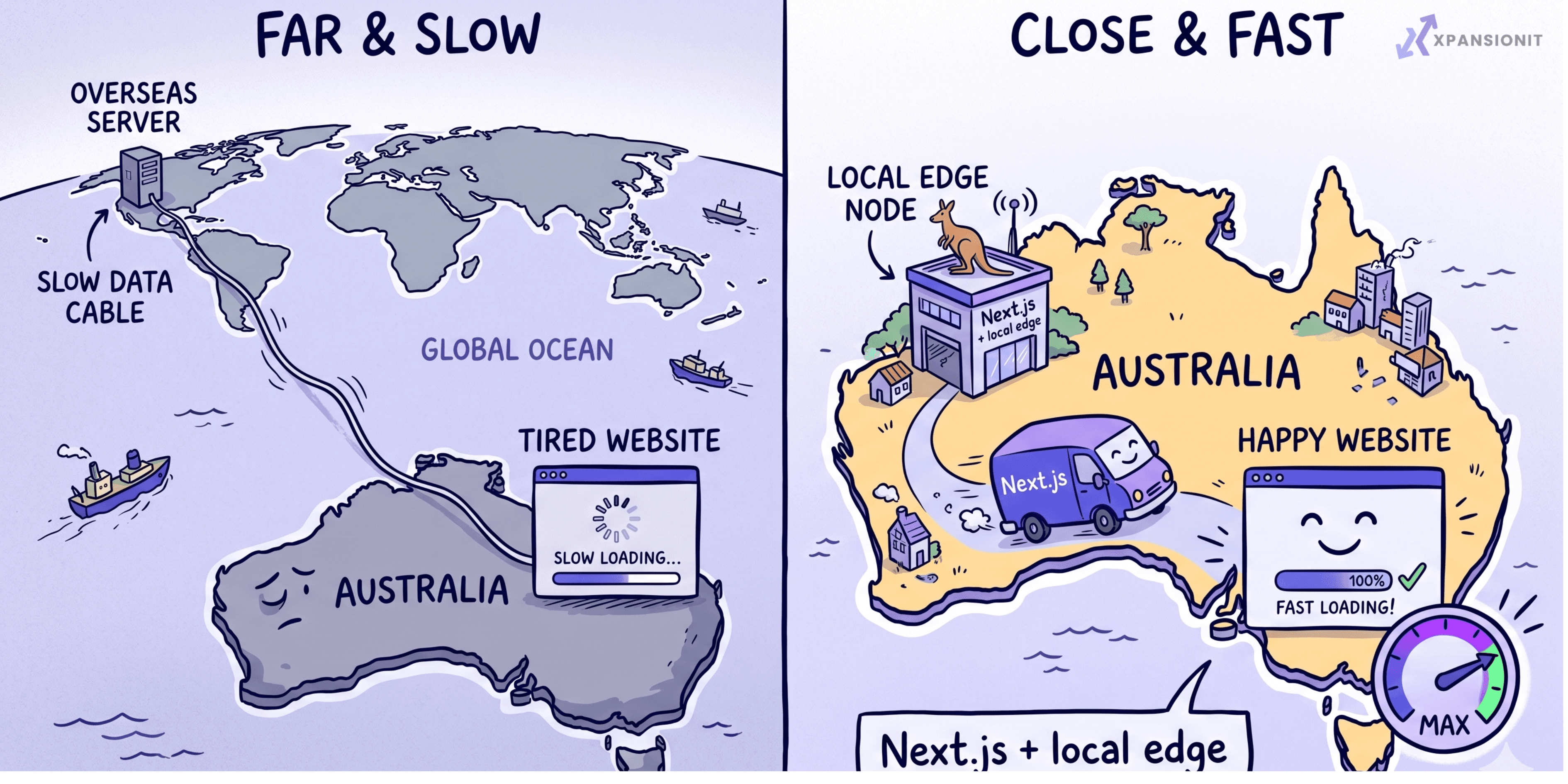
- Edge delivery versus a single origin. Next.js deploys cleanly to edge networks close to Australian users, while a WordPress site usually sits on one origin server, often overseas, until you add a CDN. For an Australian audience that distance is exactly the problem, as we explain in Next.js for Australia.
- Modern asset handling built in. Image optimisation and code splitting come with the framework, rather than depending on yet another plugin.
The result is that a well-built Next.js site is typically much faster than a typical WordPress site, and that gap is felt hardest in Australia, where we sit around the high 40s globally for fixed broadband on Ookla's Speedtest Global Index and a lot of traffic is on mobile.
Why speed matters more here
Speed is not vanity. Google and Deloitte found a 0.1 second speed improvement lifted retail conversions by around 8%, and Portent found one-second pages convert about three times higher than five-second ones. For an Australian site serving customers who already feel the distance, the faster build converts more and ranks better. The full picture is in why Australian websites are slow.
The honest side: where WordPress holds up
WordPress is not slow by nature. A well-optimised WordPress site with good hosting, caching, and a CDN can be genuinely fast. And WordPress wins on real things: it is cheap and quick to start, has an enormous plugin ecosystem, and lets non-technical staff edit content easily.
There is one area where Next.js has a clear edge beyond speed, though: security. The WordPress risk lives in its plugins, with 91% of WordPress vulnerabilities in 2025 found in plugins, not the core. A custom Next.js site has far fewer third-party components and a much smaller attack surface.
When to choose which
Choose Next.js when speed is critical, you are serving an Australian audience that feels the distance, you have outgrown a page builder, you need a custom product or app, or you want a smaller attack surface and full control. The path from a page builder to custom code is covered in outgrowing WordPress.
Choose WordPress when you have a simple blog or brochure site, a tight budget, mainly need cheap self-editing, and have no unusual requirements, as long as you host it well and add caching and a CDN.
And you do not have to give up easy editing to go custom: a headless CMS gives your team a clean editor while the site itself runs on fast Next.js code. That removes the single biggest reason people stay on WordPress.
How to decide
Measure first. Run your current site through Google PageSpeed Insights from an Australian connection. If it is a plugin-heavy WordPress site hosted overseas and speed matters to your business, a Next.js rebuild, built lean with the speed habits in building faster websites, will almost always win. If it is a simple site that is already fast enough, leave it alone.
The short version
Next.js is usually faster than WordPress because it ships lean, pre-rendered pages from the edge, while WordPress assembles plugin-heavy pages per request from a single, often overseas, server. That gap matters most in Australia, where distance and connections punish slow sites, and speed drives conversions and rankings. WordPress still wins for simple, cheap, self-edited sites, and a well-tuned WordPress site can be fast. Choose Next.js when performance, scale, or security matter; choose WordPress for simple needs on a budget.
If you are weighing a Next.js rebuild against your current WordPress site, you can book an intro call and we will check your speed and hosting before any work begins.