What makes a vertical SaaS niche defensible?
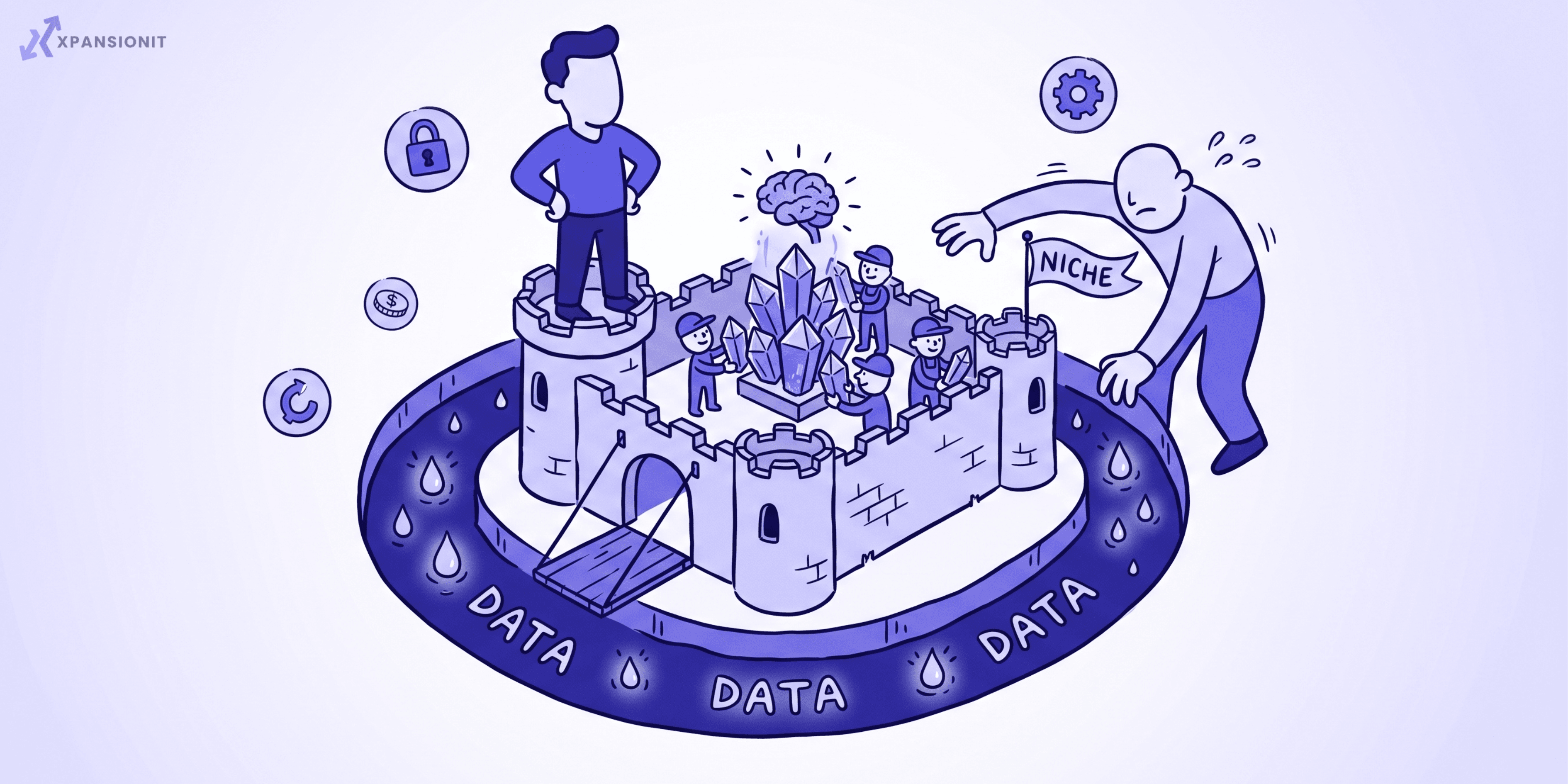
A defensible vertical SaaS niche has a problem that matters, a clear buyer and a workflow that generic software cannot handle well. The strongest products become part of the customer's daily work. They may also build up useful data, support difficult industry rules or connect tools that are hard to replace. The industry name alone is not the moat. The real protection comes from what the product learns, manages and connects over time.
If you are new to the idea, start with our plain guide to what vertical SaaS is.
Does this situation sound familiar?
You know an industry where important work still happens through spreadsheets, email, phone calls and old software. Staff enter the same information more than once. Managers cannot see what is happening without asking several people. Customers wait because one missing step holds up the whole process.
That can look like a strong software opportunity. Sometimes it is. But a bad process does not always mean people will pay for a new product. The problem must happen often enough, cost enough time or money, and matter to someone who can approve a purchase.
This is why choosing a niche should begin with the workflow, not a list of popular industries.
Which types of niche are worth examining?
Some markets are worth a closer look because the work is detailed, repeated and difficult to manage with general tools. These are not guaranteed winners. Each one still needs direct research with buyers.
| Niche to examine | Problem a product could manage | What may make it hard to replace | Main warning |
|---|---|---|---|
| Allied health coordination | Referrals, consent, appointments and communication between providers | Knowledge of local health rules and connected patient workflows | Privacy and system connections must be handled carefully |
| Construction records | Site checks, approvals, documents and subcontractor work | A full history of each project and daily use on site | Buyers may use several tools already |
| Field service compliance | Inspections, photos, evidence and recurring reports | Records built up across jobs, workers and assets | The general field service market is crowded |
| Freight exception management | Delays, damage, claims and customer updates | Carrier connections and a history of past problems | Outside systems may change without warning |
| Manufacturing traceability | Quality checks, batches, faults and corrective work | Process records tied to the way a factory operates | Setup can take time and require staff training |
| Specialist legal workflows | Intake, documents, deadlines and approvals | Knowledge of a narrow legal process and its records | Buyers expect strong privacy and careful access control |
The better opportunity is usually narrower than an industry. Software for construction is broad. Approval and evidence tracking for small commercial building contractors is much clearer. It identifies the user, the job and the reason the product may matter.
What are the main ways a niche becomes defensible?
There are four practical sources of protection. A product does not need all four on its first day, but relying on none of them leaves it easy to copy.
It owns an important workflow
The product manages a job that customers perform often and cannot ignore. It may control how work is assigned, checked, approved or billed. Once the whole team depends on that process, changing systems becomes a serious decision.
The goal is not to trap customers. It is to become useful enough that replacing the product would mean rebuilding a working part of the business.
It builds useful data over time
An industry product can collect records that become more valuable as they grow. This could include job history, common delays, equipment faults, claim patterns or cost records.
Data is only useful as protection when it is collected with permission, kept safely and used to improve a real customer outcome. A large database with poor records is not a moat.
It handles difficult industry rules
Some industries have strict requirements for records, privacy, approvals or reporting. Software that handles those rules well can save customers from repeated manual checks.
Rules also create responsibility. They change, they may differ by location, and customers may depend on the product to get them right. Do not enter a regulated market unless the team can keep that knowledge current.
It connects systems the customer depends on
A product may become valuable because it brings several tools into one clear workflow. For example, it might connect bookings, payments, customer records and reporting.
Connections are useful, but they create maintenance work. Outside services change their systems and limits. A product built around connections needs a plan for failures, updates and support.
Which product approach should you take?
There is more than one sensible way to enter a vertical market.
| Approach | When it can work | Trade-off |
|---|---|---|
| Solve one narrow problem | The pain is clear and one small tool can remove it | A competitor may copy the feature easily |
| Own a complete workflow | Several steps belong together and one buyer controls them | The first version is harder to define and sell |
| Add to software already used | Customers like their main system but need a missing tool or connection | The product depends on another company's platform |
| Build around local rules | Global products do not fit local forms, records or processes | The market may be smaller and rules require upkeep |
| Include payments in the workflow | Money already moves through the process | Payment rules, fees and support add responsibility |
A narrow first product is often the safest start. It gives you something clear to test. But the long-term plan should show how that first tool could gain deeper workflow value rather than remain one easy-to-copy feature.
How do you test a niche before building?
Use this checklist before planning a large product:
- A clear group of people faces the problem often.
- The problem costs time, money, missed work or avoidable risk.
- You can name the person who can approve the purchase.
- Current tools fail for clear reasons.
- People already use workarounds such as spreadsheets or repeated manual steps.
- You can reach possible buyers without a large advertising budget.
- The first version can solve one complete job.
- Required system connections are possible and affordable.
- Privacy and industry rules are understood.
- Customers are willing to test the idea before the full build.
Do not answer these questions from your desk. Speak to people who do the work. Ask them to show you the current process. Watch where information is copied, delayed, lost or checked by hand.
For the next stage, read our guide to building a vertical SaaS product.
What can go wrong?
The first failure is choosing an industry instead of a problem. A founder decides to build for healthcare, logistics or legal work, then adds a general list of features. The result serves no one deeply enough.
The second failure is trusting complaints without checking buying intent. People may dislike their current software but still refuse to change it. Ask what they have tried, what they already pay and who would approve something new.
The third failure is building around one feature supplied by another company. If the whole product depends on access to one model, platform or outside service, a price change or new feature can remove the advantage quickly.
The fourth failure is entering a regulated market without the right knowledge. Privacy, records and reporting cannot be added at the end. They affect what information is stored, who may see it and how the product must be maintained.
The fifth failure is making the first version too large. A product does not need to run the whole industry on launch day. It needs to complete one useful job well enough that a real customer will use it.
When is vertical SaaS the wrong choice?
Do not choose vertical SaaS only because the market sounds valuable. It may be the wrong path when the workflow is simple, buyers are hard to reach, the market is too small, or an established product already solves the problem well.
It is also risky when nobody on the project understands the industry. A development team can build the software, but it cannot guess the quiet rules people follow every day. The strongest projects pair software experience with someone who knows the work closely.
Sometimes the right answer is a simple internal tool, a connection between existing systems or a standard product with better setup. Building a SaaS business is not the answer to every software problem.
Why does this matter to us?
We at XpansionIT work on software tied to real business processes. The difficult part is rarely drawing the first screen. It is learning which steps matter, which exceptions happen and what must not break.
We would rather question a weak idea early than build a polished product around an untested guess. A smaller product with a clear job is a better starting point than a large platform with no committed users.
Talk to Us
If you are considering a vertical SaaS product, tell us about the industry, the people and the workflow you want to improve. You do not need a completed technical plan.
tell us about your idea. You can also see how we approach custom software development.
We can help you define the first useful version, identify the main risks and decide what should be tested before development begins.