

Custom CMS vs Shopify: Which One Wins Over Time?
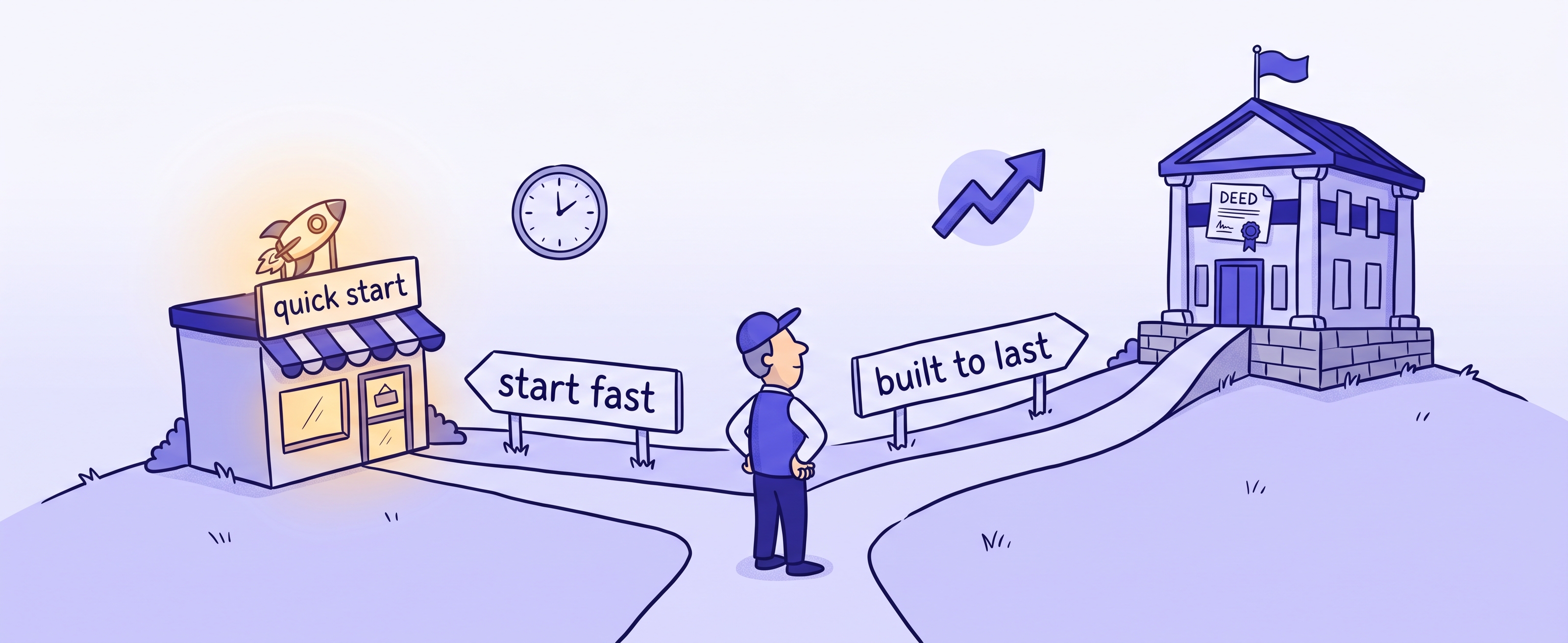
The honest answer: Shopify wins at the start, and a custom-coded store wins over the long run for a business that keeps growing. Shopify gets you online in days with no technical team, and for a new or standard store that is the right call. But you are renting, not owning, and the rent rises quietly as you scale: monthly fees, a stack of paid apps, transaction fees on every sale, and hard limits on how far you can customise. A custom content and commerce system costs more up front and then becomes cheaper to run, faster, and fully yours. We at XpansionIT build both kinds of thing, so this is not a pitch to rip up your Shopify store tomorrow. It is the long-term case most platform comparisons skip.
Where Shopify Really Wins
Let us be fair, because a one-sided argument is a sales pitch, not advice. Shopify is excellent at the job it was built for. It gets a standard store live fast, it handles hosting, security, and payments for you, and it needs no developer to run day to day. For a new business testing whether people will buy, a store with a simple catalogue, or a team with no technical resources and a tight budget, Shopify is usually the sensible choice, and we will tell you so. If that is you, stay where you are and come back to this when you start feeling the walls. The mistake is not choosing Shopify. The mistake is staying on it long after it has started costing you more than it saves.
The Rent You Do Not Notice at First
Here is what a hosted platform quietly charges you as you grow, beyond the headline subscription. There are app fees, because a mature store leans on a stack of paid apps to do things a custom build would include, and those add up every month, forever. There are transaction fees, a slice of every single sale unless you use the platform's own payment system. There are theme and workaround costs when you want something the platform does not do natively. And there is the cost you cannot see on an invoice: the revenue you never captured because the platform would not let you build the checkout, the pricing, or the experience you needed.
None of these hurt at ten orders a day. All of them compound at a thousand. The pattern is consistent enough to plan around: for a growing store, the recurring cost of renting eventually overtakes the one-off cost of owning, and from that point on you are paying more every month for less control. This is the same ownership logic we set out in low-code versus custom software: the cheapest option on day one is rarely the cheapest by year three.
What Owning It Really Buys You
A custom-coded content and commerce system is not just Shopify without the fees. It changes what is possible.
You own the code and the data. Your store, your customer records, and your logic live in something you control and can move, rather than on a platform that owns the relationship and can change its terms or pricing.
You own the performance. A custom front end, built on a modern framework and served from the edge, can be dramatically faster than an app-laden hosted theme, and speed is money in commerce. Slow stores lose sales, which is the whole reason we wrote about why so many Australian websites are slow.
You own the experience. No checkout walls, no "the platform does not support that." Complex B2B pricing, multi-vendor logic, subscriptions, unusual workflows, whatever your business really needs, gets built, instead of bent around what the platform allows.
You own the SEO. Full control of your URLs, your structured data, and your technical setup, rather than the fixed structure a hosted platform imposes.
The modern middle path is worth naming here too: you do not always have to choose between a rigid platform and a full custom build. A headless approach keeps a commerce engine for the plumbing while giving you a completely custom, fast front end, which is the best of both for many growing brands. We cover that in detail in headless commerce in Australia, and the front-end performance case is the same one behind choosing Next.js over WordPress.
Custom CMS vs Shopify, Side by Side
Here is the honest comparison, trade-offs included.
| Factor | Shopify (hosted) | Custom-coded store |
|---|---|---|
| Time to launch | Fast, days to weeks | Slower, weeks to months |
| Upfront cost | Lower | Higher |
| Ongoing cost as you grow | Rises with fees and apps | Lower, mostly maintenance |
| Customisation | Limited by the platform | Effectively unlimited |
| Performance | Good, degrades with apps | Can be much faster |
| Transaction fees | Often a cut of every sale | Only your payment processor |
| Ownership of code and data | The platform's terms | Fully yours |
| Maintenance | The platform handles it | Your team or partner handles it |
| Best for | New or standard stores | Growing, complex, or scaling stores |
The table makes the real point: neither wins on everything. Shopify wins the start, custom wins the long game. The right choice is about where your business is heading, not where it is today.
When It Is Worth Switching
The trigger to move off a hosted platform is rarely a revenue number. It is friction. You have probably outgrown Shopify when the app fees have quietly become a serious monthly cost, when you keep hitting "the platform cannot do that" on things your business really needs, when performance is suffering under the weight of add-ons, or when you cannot get the customer data and control you need. If two or three of those are true, you are already paying the cost of staying, just not on a line item you can see. This is the commerce version of the story we tell in outgrowing WordPress and moving to custom code: the tool that got you started is now the thing holding you back.
What Can Go Wrong
Custom is not a magic upgrade, and pretending otherwise would be the same overselling we are warning you about. A few things go wrong when businesses switch badly.
Switching too early. Building custom before you have proven demand is expensive and premature. Validate on a platform first, then build. If you are not sure you have outgrown Shopify yet, you probably have not.
Underestimating ownership. When you own the store, you own the maintenance, security, and uptime too. That is a real, ongoing responsibility, which is why a serious custom build comes with a plan for who looks after it, not just who builds it.
A rushed migration. Moving a live store, its data, its URLs, its SEO, without a careful plan is how businesses lose rankings and orders during the switch. It should be phased and tested, never flipped overnight.
Choosing a builder who only builds. A store that is launched and then abandoned is worse than the platform you left. The right partner treats launch as the start of the relationship, which is exactly why we pair building with ongoing maintenance and support.
Why This Matters to Us
We are a small Adelaide team, and we build custom stores, so we could tell every business to leave Shopify today. We do not, because that would not be true. What we care about is the long-run maths: whether the store you are on is still saving you money and enabling growth, or quietly taxing both. When Shopify is right, we say stay. When the rent has overtaken the value and the platform is capping what your business can become, owning your store is the better investment, and we will show you the numbers for your situation before you commit to anything. Rent when you are starting. Own when you are scaling.
Talk to Us
If you are on Shopify and starting to feel the walls, the app bills, the checkout limits, the performance drag, we are happy to give you a straight read on whether it is time to move or smarter to stay. Call us on +61 420 883 221 or tell us about your store, and we will map where the platform is costing you against what a custom or headless build would change.
And when the long-run case points to owning your store, our web application development work is built for exactly this: fast, custom, fully-owned commerce that grows with you instead of taxing you for growing. When you are ready, get in touch.