How to Take Over a Software Project From Another Developer
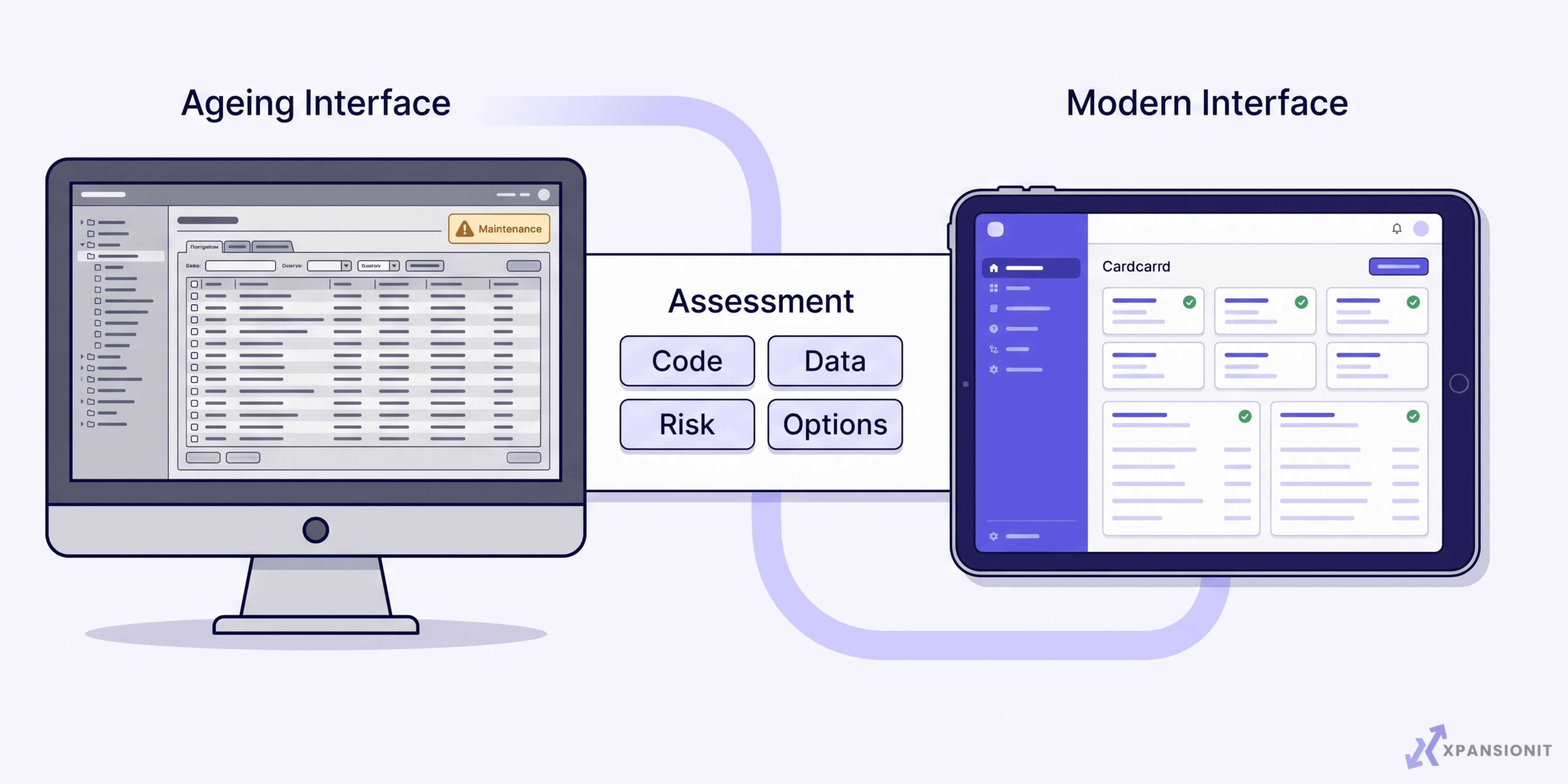
The short answer: never agree to take over someone else's code until you have run a proper handover assessment, because the risk lives in what you cannot see. Before committing to a price or a timeline, a new developer should get access to the code, the accounts, and the person who built it, then review the code quality, the documentation, the security, and how the thing is deployed. Only after that assessment can anyone give you an honest estimate. We at XpansionIT are often the second or third team on a project, so this checklist is what we run before we say yes, and it is the same one you should insist on from anyone you hire. If you would rather hand the whole job to a team, our software project rescue page explains how we take over stalled builds.
A Situation You Might Recognise
It usually sounds like this. Your original developer has gone quiet, moved on, or priced their next phase somewhere you cannot follow. Maybe it was a freelancer who did great work and then vanished, or an agency whose contract ended, or one talented person who has left and taken everything they knew with them. The software mostly works, but nobody left can safely change it. Now you need someone new to pick it up, and every developer you speak to is either nervous about it or suspiciously confident. Both reactions should make you cautious, because the honest answer to "can you take this over" is always "let me look first."
Why Inherited Code Is Risky
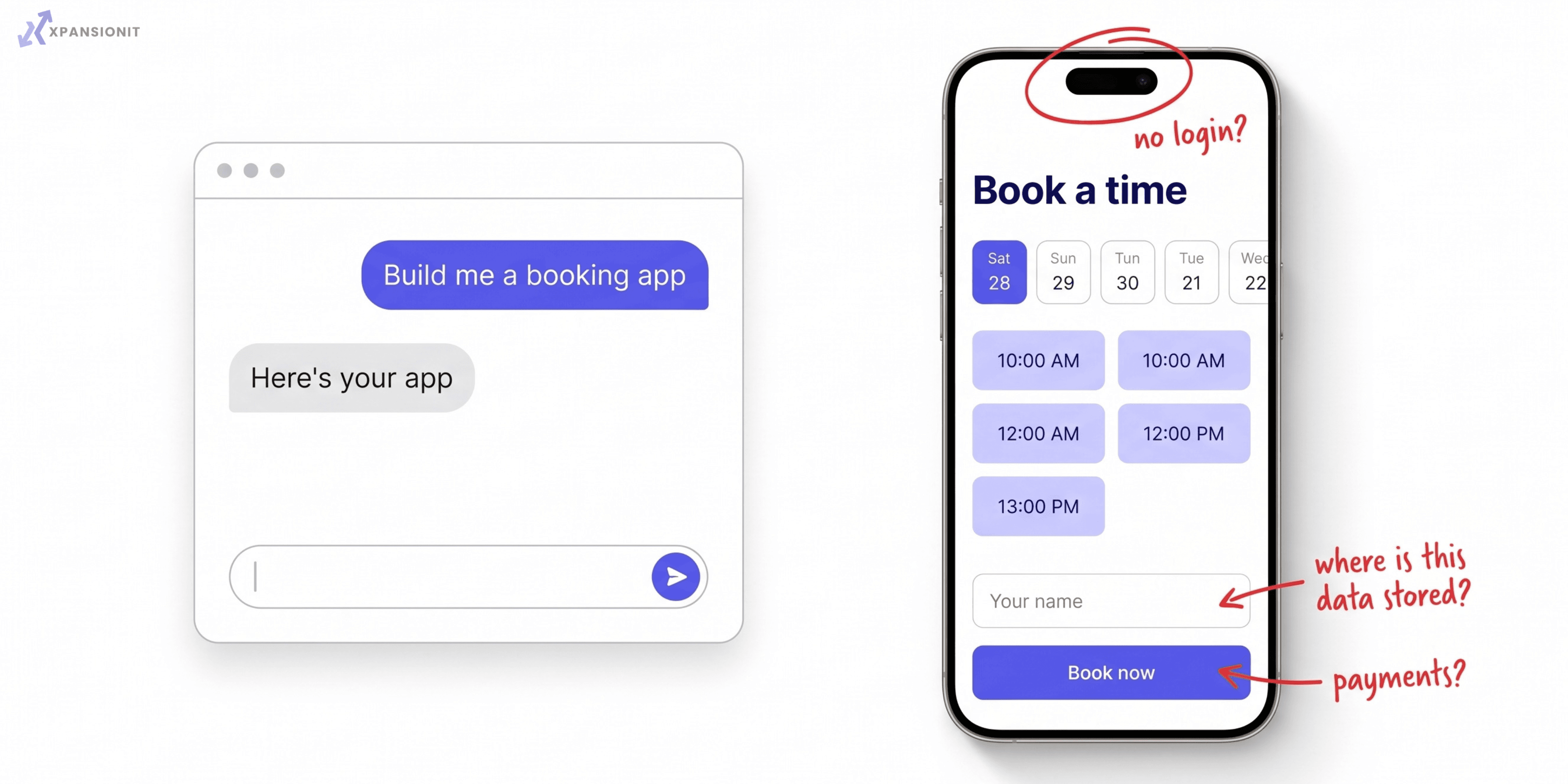
Taking over an existing codebase is harder than starting fresh, and it helps to understand why so you can judge it fairly. When someone builds from scratch, they understand every decision. When you inherit a system, you are stepping into decisions you did not make, for reasons nobody wrote down. The real risks are the invisible ones: business rules buried in code that no document mentions, a password or key that only the previous developer had, a dependency that is years out of date, or a piece that looks simple but holds the whole thing together. None of these show up in a demo. All of them show up later, usually at the worst time. This is a close cousin of the problem we describe in vibe coding and technical debt: code that works but nobody understands is a liability waiting for a deadline.
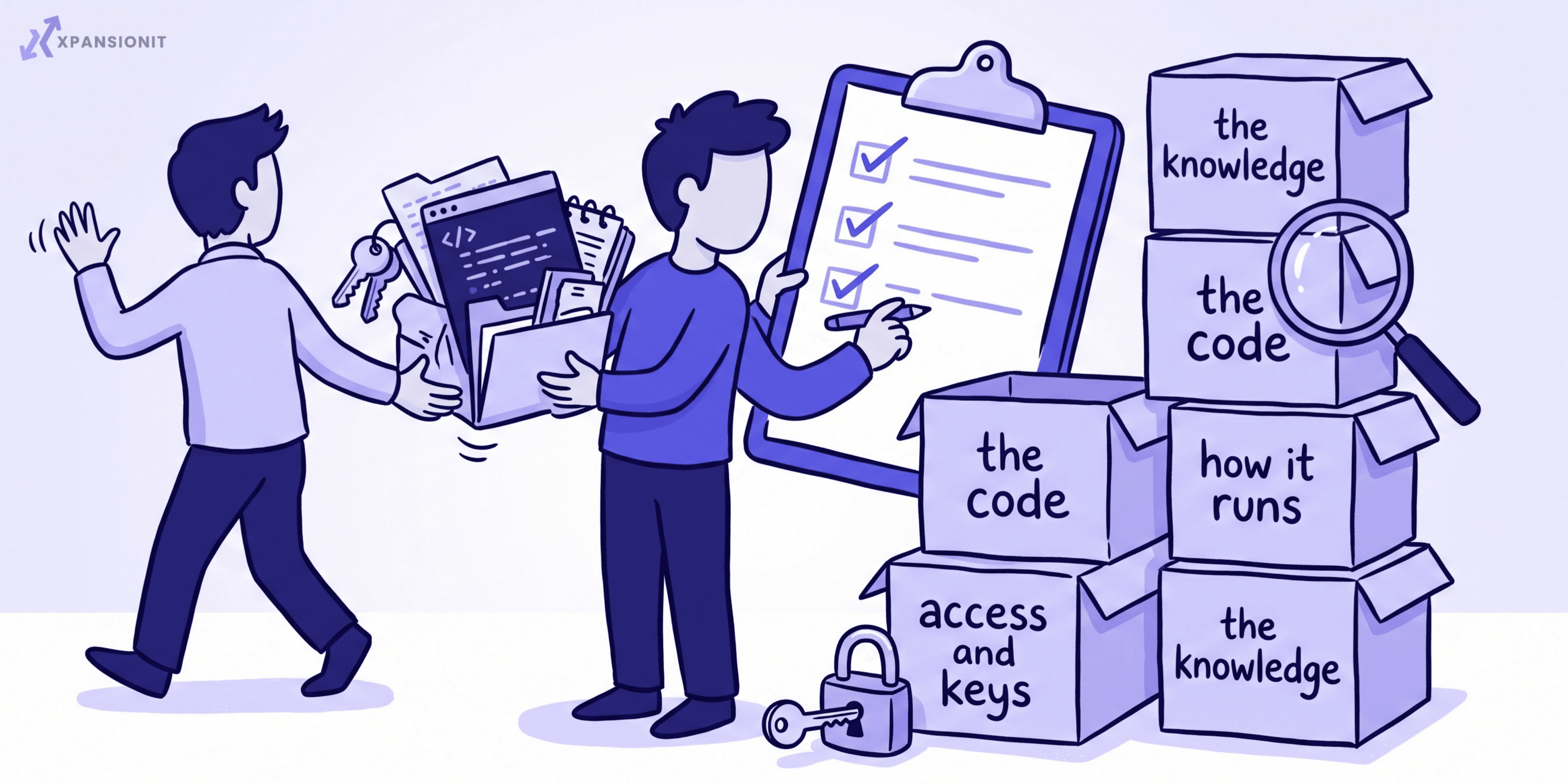
The Handover Assessment Checklist
Run this before anyone quotes a full price. A developer who wants to skip it and jump straight to a number is guessing, and you will pay for the guess later.
Access and ownership
- You have, or can get, full ownership of the source code and its full history, not just the latest copy.
- You control the accounts: hosting, domain, database, third-party services, and app stores. Not the previous developer.
- You can retrieve every password, key, and credential the system needs to run.
- You have any design files, documentation, and written specifications that exist.
The code itself
- A developer has read the actual code, not just used the app, and can describe how it is structured.
- The technology it is built on is current and still supported, not abandoned.
- There is version control with a real history, so changes can be traced and undone.
- The code has tests, or the new team has scoped what it will cost to add them.
How it runs
- Someone can explain, and ideally demonstrate, how a change goes from code to live without breaking things.
- You know where the data lives, who can access it, and whether that meets your obligations.
- The security basics have been reviewed: how users log in, how data is protected, what is exposed.
The knowledge
- You can still reach the original developer for a paid handover, even a short one.
- The critical business rules are written down, or the new team has a plan to recover them from the code.
If most of these are green, a takeover is straightforward. If most are red, it is still doable, but it is a rescue, and it should be scoped and priced as one. The point of the checklist is to know which situation you are in before you sign, not after.
Your Realistic Options
Once the assessment is done, you are choosing between a few honest paths, and the right one depends on what the review found.
Continue the existing codebase. If the code is sound and just needs a new owner, this is the cheapest and fastest option. Keep building on what exists.
Stabilise, then continue. If the code works but is fragile or undocumented, the sensible move is a short stabilisation phase first, adding tests, documenting the critical logic, updating dangerous dependencies, before any new features. It feels like paying for no visible progress, but it is what makes everything after it safe.
Partial rebuild. If some parts are solid and others are beyond saving, keep the good and replace the worst, one piece at a time, rather than all at once. This is the same incremental thinking we set out in legacy application modernisation approaches.
Full rebuild. Rare, and a last resort. Only when the code truly cannot be understood, tested, or safely changed. Even then, rebuild incrementally rather than switching everything off at once.
Here is how those compare at a glance.
| Option | When it fits | Main risk |
|---|---|---|
| Continue as-is | Code is sound, just needs a new owner | Hidden issues surface later |
| Stabilise then continue | Works but fragile or undocumented | Upfront cost with no new features yet |
| Partial rebuild | Some parts good, some beyond saving | Managing old and new together |
| Full rebuild | Code cannot be understood or trusted | Highest cost and longest timeline |
What Can Go Wrong
Even with a careful assessment, a few failure patterns recur, and knowing them helps you avoid them.
The lost keys. The single most common disaster is discovering the previous developer still controls the domain, the hosting, or an app store account, and has gone silent. Sort ownership and access first, before anything else, because a beautiful codebase you cannot deploy is worthless.
The optimistic quote. A developer keen to win the work quotes as if the code is clean, then hits the undocumented mess and comes back for more money and time. A takeover quote given without a real assessment is not a quote, it is bait. Insist on the assessment first, even if you pay a small fee for it.
The unnecessary rebuild. The opposite failure, and just as expensive. Some developers instinctively want to rebuild everything, because working with someone else's code is unpleasant and a clean start is easier for them, not cheaper for you. Be sceptical of "we should just start again" unless the assessment truly supports it.
The knowledge that walked out the door. When the only person who understood the business rules has gone and nothing was written down, recovering that logic from the code takes time. If you can still reach the original developer, even a few paid hours of handover is worth far more than it costs.
How to Protect Yourself Next Time
Since the pain of a bad takeover is really the pain of a bad handover, the fix is to prevent it. Own your code and accounts from day one, in your name, not your developer's. Insist that critical business logic is documented as it is built. And treat the ability to hand the project to someone else as a feature you are paying for, not an afterthought. A system that only one person can maintain is a risk no matter how well it runs today.
Why This Matters to Us
We are a small Adelaide team, and a real share of our work is being the next team on a project someone else started. We have learned to slow down at the start, run the assessment properly, and tell people the truth about what they have, even when the truth is that it needs less work than they feared, or more. We would rather give you a clear-eyed read and a sensible plan than win the work with an optimistic number and disappoint you three months in. A good takeover is calm and boring, and that is how you want it.
Talk to Us
If you have a system you have inherited, or are about to, and you want an honest assessment before you commit to anyone, we are happy to run the checklist above on your actual project. Call us on +61 420 883 221 or tell us about the system you have inherited, and we will tell you plainly whether it needs a new owner, a stabilisation phase, or something more, and what that would realistically involve.
If it turns out the system needs more than a new pair of hands, our legacy system modernisation work is built for exactly this: taking on software someone else made and bringing it safely up to date without stopping the business that depends on it. When you are ready, get in touch.